The Future of Motor Control with Vacon Variable Frequency Drives
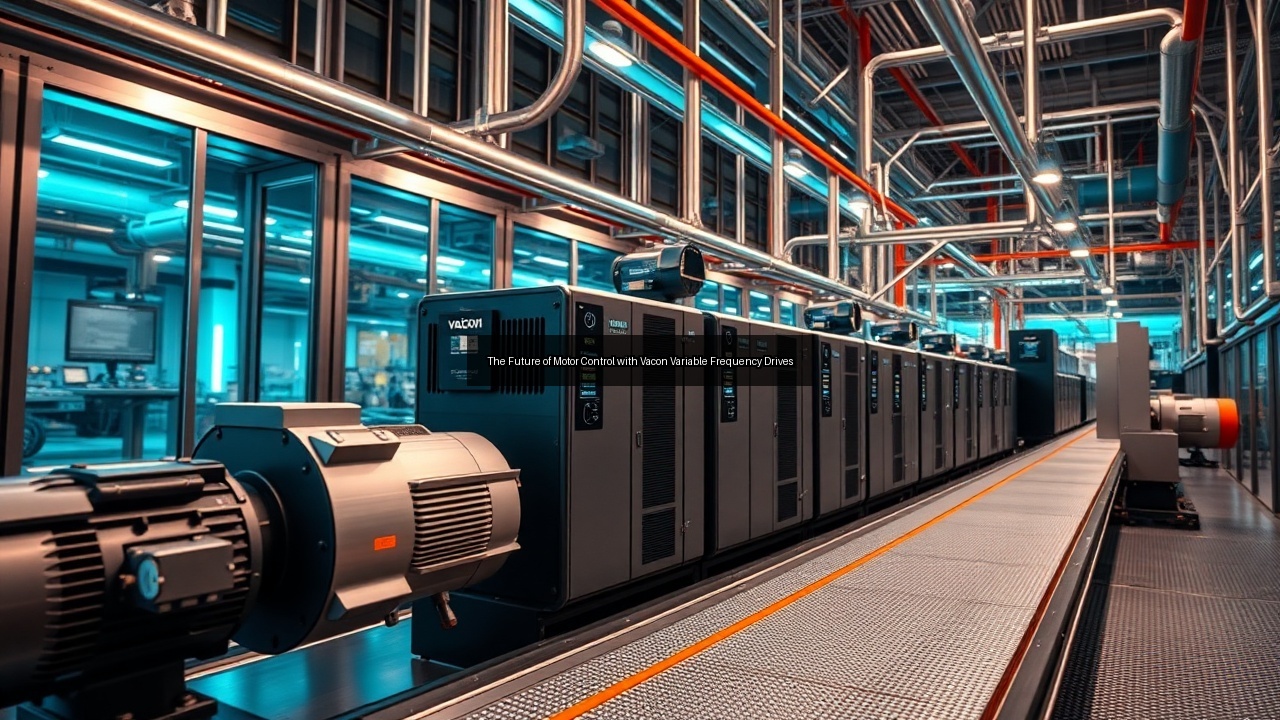
Understanding Vacon Variable Frequency Drives
What are Vacon Drives?
Vacon drives represent a specialized line of variable frequency drives designed to regulate the speed and torque of electric motors with precision. Engineers developed these units to address the growing demand for efficient motor control across demanding industrial environments. Vacon ac drives integrate advanced electronics that convert fixed-frequency power into adjustable output, allowing operators to match motor performance directly to process needs. Users install vacon drives in systems where consistent speed variation prevents energy waste and mechanical stress. The technology supports both low-voltage and medium-voltage applications, making it adaptable for pumps, fans, and conveyors alike. Maintenance teams appreciate the modular design that simplifies upgrades without full system replacement. Vacon drives also include built-in communication protocols that connect seamlessly with modern automation platforms. This flexibility positions them as reliable choices for facilities seeking long-term motor optimization without frequent hardware changes.
How Vacon Drives Work
Vacon drives operate by first rectifying incoming AC power into DC, then inverting that DC back into variable-frequency AC output. This process gives operators exact control over motor speed through changes in frequency and voltage. Inside each unit, insulated-gate bipolar transistors switch at high speeds to shape the output waveform and minimize harmonic distortion. Sensors feed real-time data on current, voltage, and temperature back to the drive controller, which adjusts parameters automatically to maintain stable operation. When load conditions shift, vacon drives respond within milliseconds to prevent overloads or underperformance. The firmware supports multiple control modes, including scalar, vector, and direct torque control, depending on application requirements. Technicians configure these settings through intuitive keypads or remote software interfaces. Over time, the drive logs operational data that helps predict maintenance intervals and reduce unplanned downtime. This closed-loop approach ensures electric motors run at peak efficiency under varying conditions.
Key Features of Vacon Variable Frequency Drives
Vacon variable frequency drives stand out through robust overload capacity, wide power ranges, and integrated safety functions. Many models include built-in EMC filters that reduce electromagnetic interference without external components. The drives support multiple fieldbus options such as Profibus, Ethernet/IP, and Modbus, allowing direct integration into existing plant networks. Advanced models feature regenerative braking that returns energy to the supply line instead of dissipating it as heat. Enclosures range from IP20 for cabinet mounting to IP66 for harsh outdoor locations. Firmware updates extend functionality over the product lifecycle, protecting the initial investment. Users also benefit from customizable I/O configurations that match specific sensor and actuator requirements. Diagnostic tools built into the interface display fault codes and trending data in clear formats. These combined attributes make vacon drives suitable for both new installations and retrofits of older motor systems.
Advantages of Using Vacon Drives in Motor Control
Energy Efficiency and Cost Savings
Facilities that install vacon drives typically record substantial reductions in electricity consumption because motors no longer run at full speed continuously. Variable frequency drives adjust output precisely to demand, cutting energy use during partial-load periods that dominate most operating cycles. Plant managers report payback periods under two years when replacing fixed-speed starters with vacon ac drives on pumps and fans. Lower mechanical wear also decreases repair expenses and extends equipment life. Utilities sometimes offer rebates for documented efficiency gains achieved through variable speed drives. The drives further reduce peak demand charges by smoothing motor startup currents. Operators monitor savings through built-in energy counters that track kilowatt-hour reductions over time. These measurable benefits compound across multiple motors, delivering consistent operational cost advantages in energy-intensive sectors.
Enhanced Performance of Electric Motors
Vacon drives improve motor performance by supplying the exact voltage and frequency required at every operating point. This precise matching eliminates excess torque that accelerates bearing wear and winding insulation breakdown. Soft-start capabilities prevent the high inrush currents that stress power distribution equipment during direct-on-line starts. Vector control modes deliver full torque at zero speed, which benefits applications such as hoists and extruders. The drives also compensate for voltage fluctuations automatically, keeping motors running within rated parameters. As a result, production lines maintain tighter process tolerances and higher throughput. Maintenance logs show fewer motor failures after vacon drives replace older starters. Performance gains appear quickly in both new installations and retrofits of existing electric motors.
Reliable Control of Variable Speed Drives
Reliable control remains essential when multiple variable speed drives operate in coordinated sequences. Vacon drives incorporate master-follower functions that synchronize several motors without external controllers. Built-in PID loops handle pressure, flow, or temperature regulation directly inside the drive. Safety functions such as safe torque off meet international standards and reduce the need for separate contactors. Redundant power supplies and cooling fans increase uptime in critical processes. When a fault occurs, the drive executes controlled stops that protect both the motor and connected machinery. Remote monitoring options allow technicians to diagnose issues from off-site locations. These features combine to deliver dependable operation across continuous-duty applications where downtime carries high costs.
Applications of Vacon Drives Across Industries
HVAC Systems and Vacon Drives
HVAC installations rely on vacon drives to modulate fan and pump speeds according to real-time building loads. Variable air volume systems achieve better comfort levels when supply fans adjust output continuously rather than cycling on and off. Chilled-water pumps equipped with vacon ac drives maintain stable differential pressure while consuming less power during low-demand hours. Building automation systems communicate setpoints directly to the drives through BACnet or LonWorks interfaces. Energy dashboards display the resulting savings, which often exceed thirty percent compared with constant-speed operation. Quiet operation at reduced speeds also improves occupant satisfaction in offices and hospitals. Facility engineers value the compact size that fits into crowded mechanical rooms without extensive modifications.
Industrial Automation and Actuators
Industrial automation lines use vacon drives to position actuators and conveyors with repeatable accuracy. Packaging machines require rapid acceleration and deceleration profiles that only variable frequency drives can deliver consistently. In robotics cells, vacon drives coordinate servo-like performance from standard induction motors at lower cost. Process industries program the drives to follow recipe-specific speed curves that optimize throughput. Integrated safety functions allow quick stops when guards open without additional hardware. Production engineers program motion sequences through the drive keypad or external PLCs. The resulting flexibility supports frequent product changeovers without mechanical adjustments to the actuators themselves.
Water Treatment and Pump Control
Water treatment plants apply vacon drives to raw-water intake pumps, chemical dosing pumps, and sludge transfer systems. Precise flow control prevents overflows and reduces chemical consumption. Aeration blowers equipped with these drives maintain dissolved oxygen levels while avoiding energy spikes during low-load periods. Remote telemetry links transmit drive status to central control rooms for rapid response to alarms. Corrosion-resistant enclosures protect equipment in humid treatment environments. Operators record fewer pump failures after converting fixed-speed units to variable speed drives. The technology also supports energy reporting required by environmental regulations in many regions.
Comparing Vacon Drives with Other AC Drives

Vacon Drives vs. Traditional AC Drives
Traditional ac drives often lack the modular construction and wide voltage coverage that define vacon drives. Vacon units provide higher overload ratings for demanding starts and longer product support cycles. Service teams find the consistent spare-parts platform across power ranges simplifies inventory management compared with mixed-brand installations. Firmware features such as adaptive autotuning reduce commissioning time on new motors. Users also note clearer documentation and more responsive technical support channels. These differences become apparent during large-scale projects where standardization reduces training requirements and spare-parts logistics.
The Role of VFDs in Modern Applications
Variable frequency drives now anchor motor control strategies in nearly every automated facility. VFDs enable demand-based operation that aligns energy use with actual production requirements. They also serve as gateways for condition monitoring by streaming motor current and vibration data to cloud platforms. Integration with safety systems allows coordinated emergency stops across entire process lines. As plants adopt more renewable energy sources, VFDs help balance variable loads without destabilizing the grid connection. Their continued evolution supports the shift toward higher efficiency classes of electric motors mandated by international regulations.
Future Trends in Variable Frequency Drives
Future variable frequency drives will incorporate deeper machine-learning algorithms that optimize motor performance without manual tuning. Wider adoption of silicon-carbide semiconductors promises smaller footprints and higher switching frequencies. Cybersecurity features will become standard as drives connect directly to enterprise networks. Edge computing inside the drive will enable local decision-making for faster response to process changes. Manufacturers continue to expand regenerative and common-DC-bus configurations that further improve overall system efficiency. These advances ensure that vacon drives and similar technologies remain central to motor control strategies for decades ahead.